Monday 24th November – our final day in SA, and the winds finally dropped enough for our boat-trip to Robben Island go ahead without needing the RNLI on high alert. Huzzah !
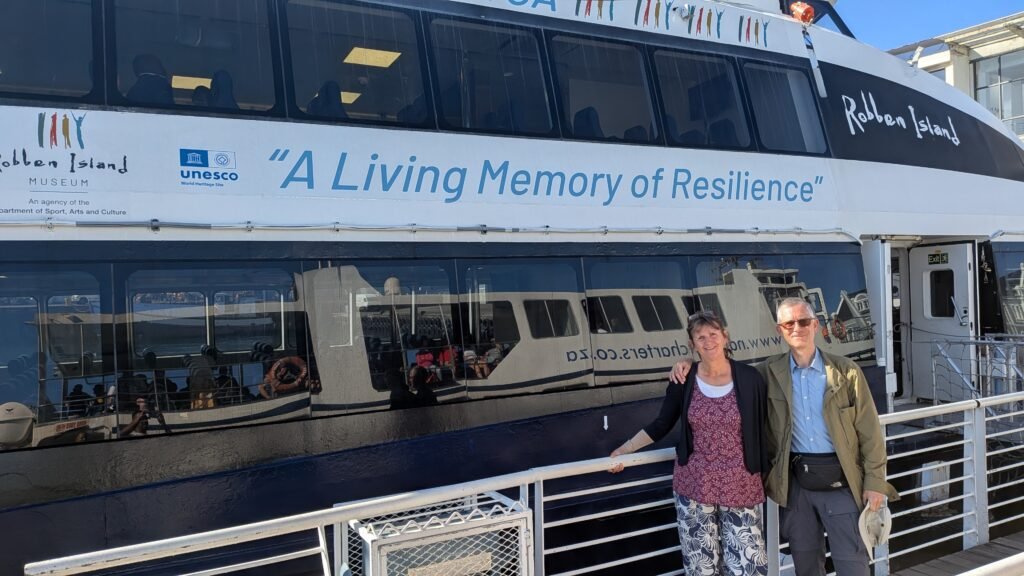
It’s a 45 min boat trip through fairly rough waves – we assume we will be on a very swishy looking cruiser by the ticket office (pic), but are hustled past that one to a much shabbier ferry (the old bait & switch ploy).


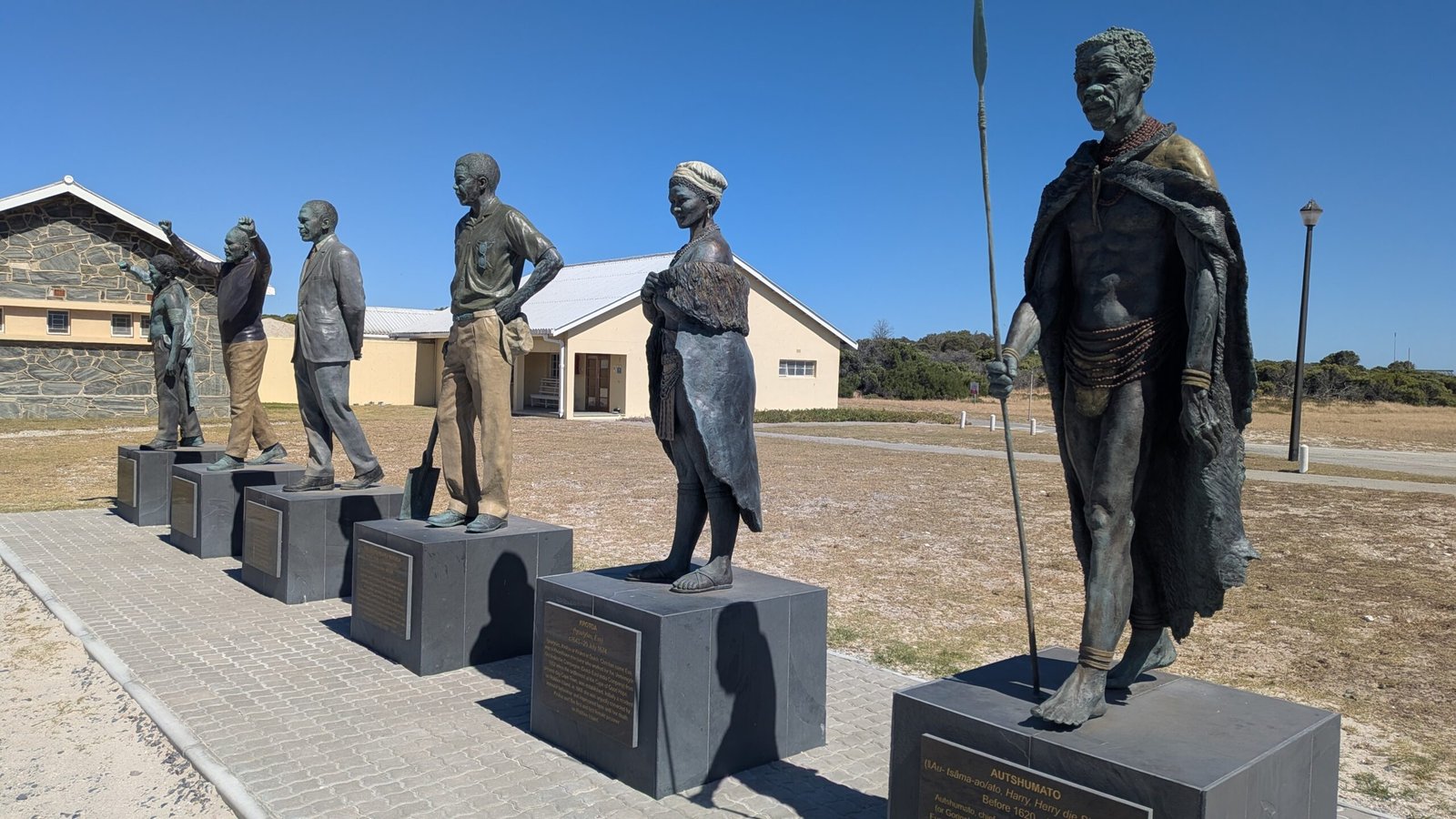
At the entrace to the prison is a set of statues of some notable prisoners. The spear on the right is held by Ocho Mayo – first political prisoner of RI : imprisoned for the ‘crime’ of stealing his own cattle back from the Dutch settlers. Mandela is third from right, with a spade.

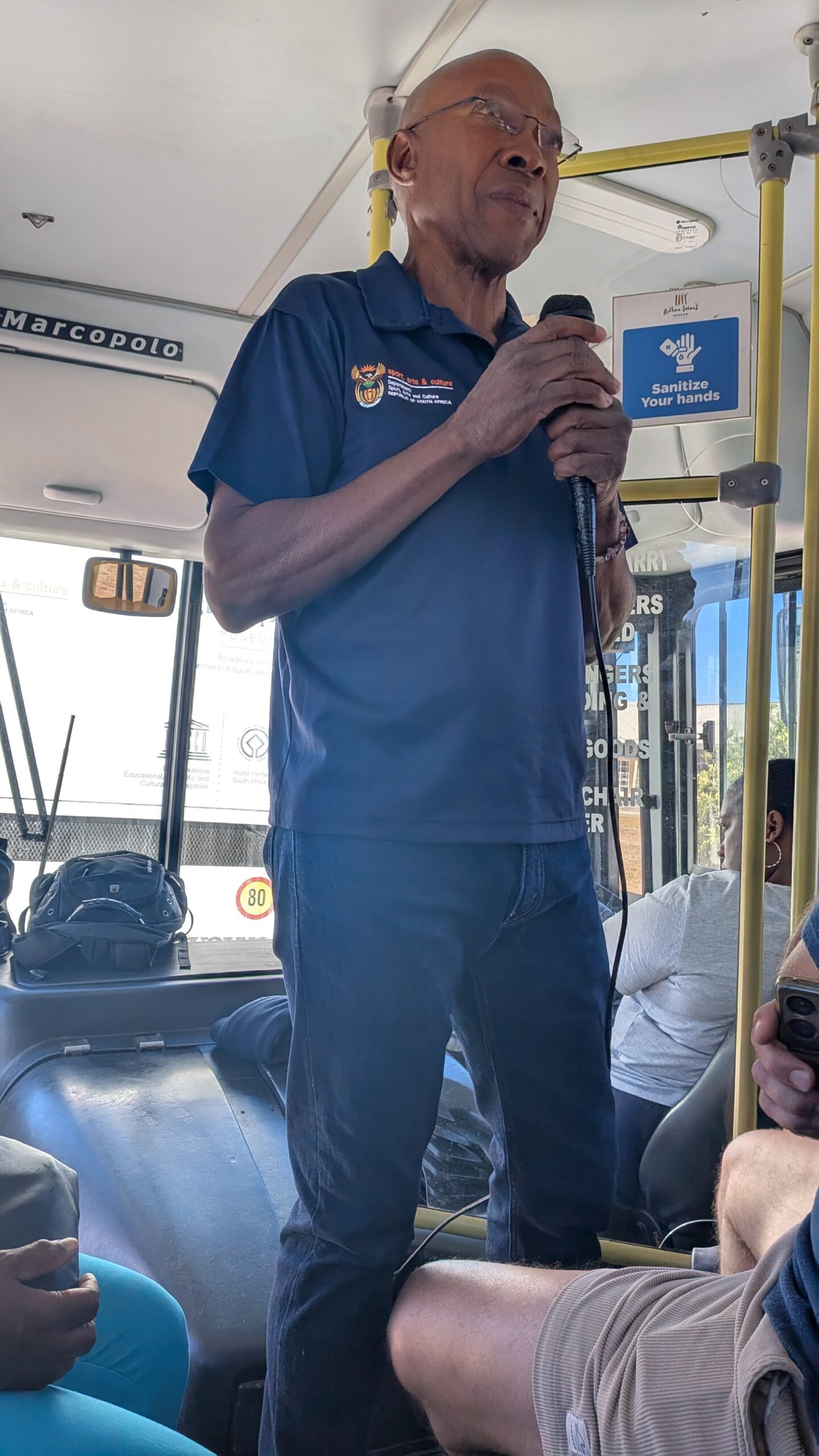
We have 2 guides, both of whom are former inmates of the prison. They are not trained speakers, but have raw and painful experiences to pass on. Our guide on the short bus drive is a 67 yr old Modise, who was imprisoned here from 1977-82. He showed us the wounds he still has from torture inflicted here. As a teenager, Steve Biko was his inspiration – he joined the ANC and admitted that he wanted to shoot whites. Now he sees that hate achieves nothing, and wants to improve the world. He took a degree in education after his release, and told us “Education is the most important thing for all young people. It removes hate.” Some of the notes I took on his speech as we drove round the site :
- Robben Island acted as a “university” for young black activists – the inmates took turns to teach others useful skills / political awareness during their time working at at the lime pits.
- Guards were all white / Afrikaners.
- Foreign boycots did improve things here.
- Nobody escaped since 1961 – there was a plan to use Russian helicopter to get Mandela and others out, but eventually decided against it because of dire consequences if he were shot down.
- Church of Good Shepherd is the only private building on RI – built by by UK Anglicans, for lepers. Showed it was fine to share cups with them.
- Leprosy victims were buried right up to the side of D section where Mandela was incarcerated – the ground was considered unclean. White graves were separate and kept neat, with stones.
- Housing around the prison is for prison warders and families. Sports and entertainment facilities, schools too. Governor’s mansion has 13 rooms.
- The prison capacity of RI was about 4000. It has been operating as a museum for 30 years. During WWII, it served as a major military base.
- The hated Pass Laws ( “Dom Pas” ) limited movement for blacks. 1960 protest march resulted in the Sharpeville massacre – but similar massacres in Langa township and other places were not reported
- Robert Sobukwe , organiser of the protests, left ANC to form Pan African Congress. Was moved to RI when his 3 year term in Jo’burg ended, then had 6 years of annually re-imposed jail. (They actually created a legal clause with his name to enable this to happen). He was confined to a tiny house , no contact with anyone. Even after leaving RI, he was isolated right until his death in 1978, in Kimberley.
The saddest of final words from him before we left the bus – he is 67 years old, but can’t afford even the basics. Feels the ANC has abandoned them all after the struggle.
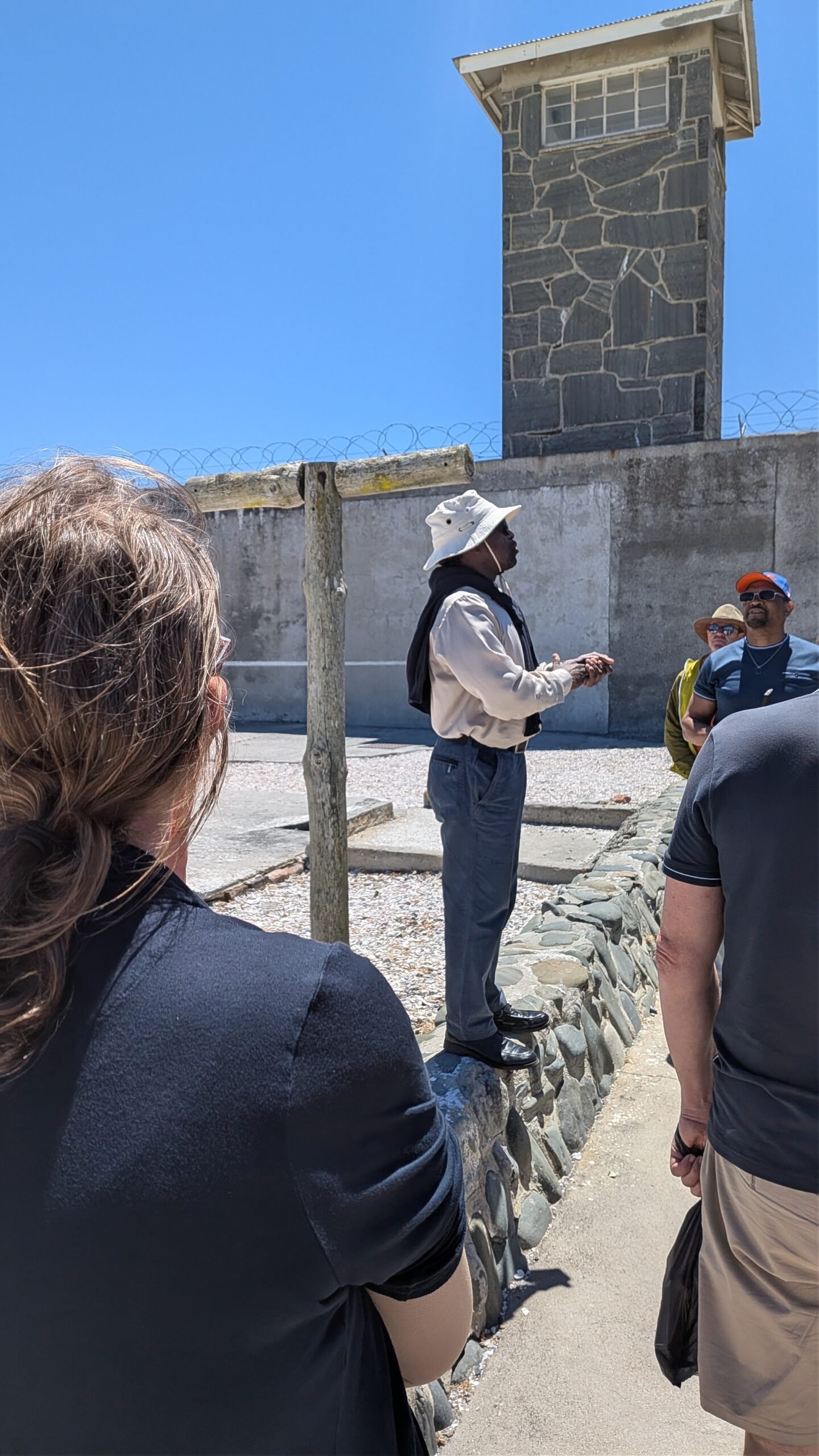
- Our second guide takes over the interior tour. He arrived in 1983 – just after Mandela had been moved to another prison.
- Showed us the the various interior sections – inc the block where the Rivonia Trial group were kept and hid their Long Walk to Freedom materials under the plants in the garden.
- He also feels let down by the ANC – still renting as an old man, nothing to leave for his children. Doing these tours helps to let the anger drain away.
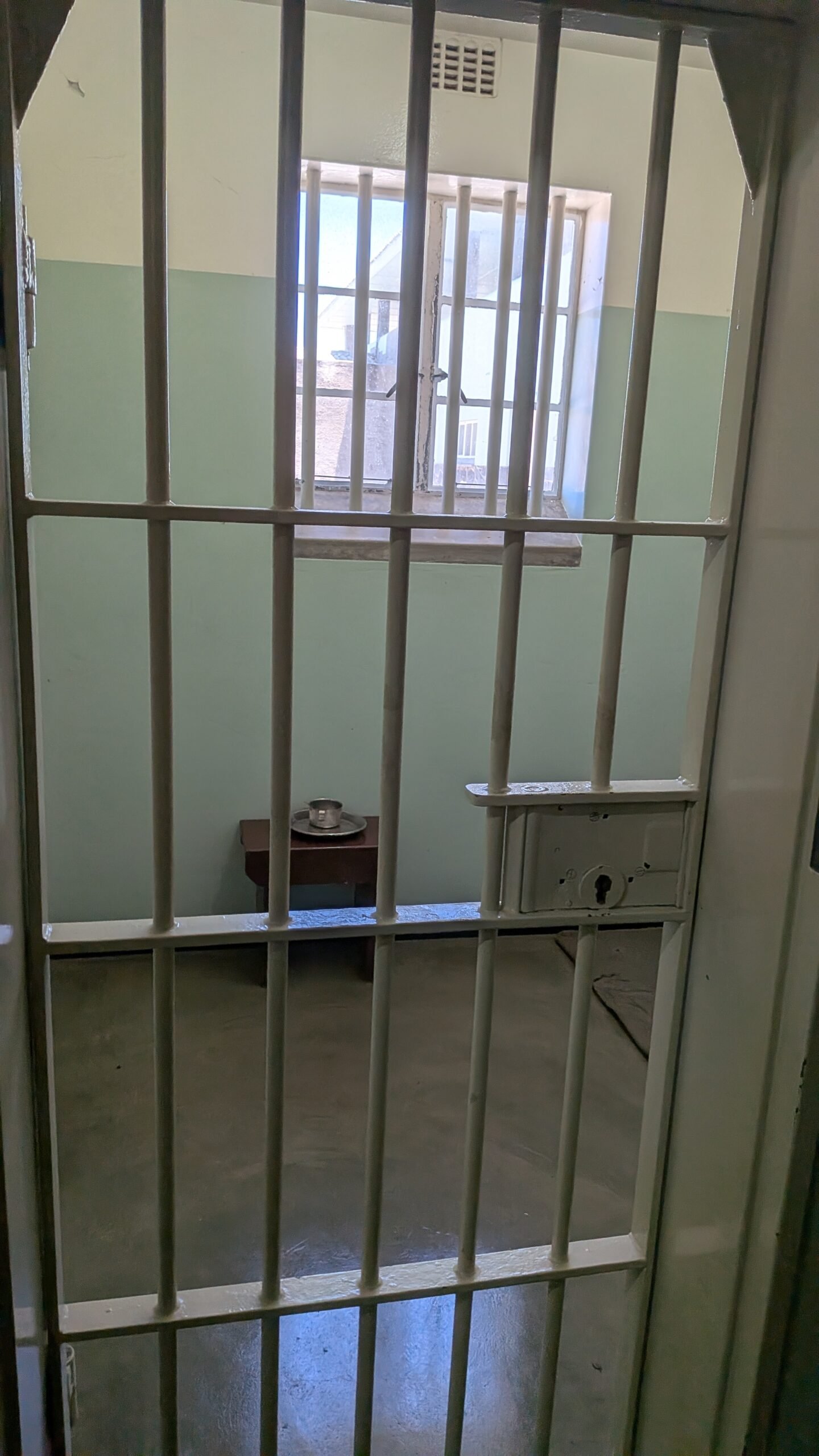
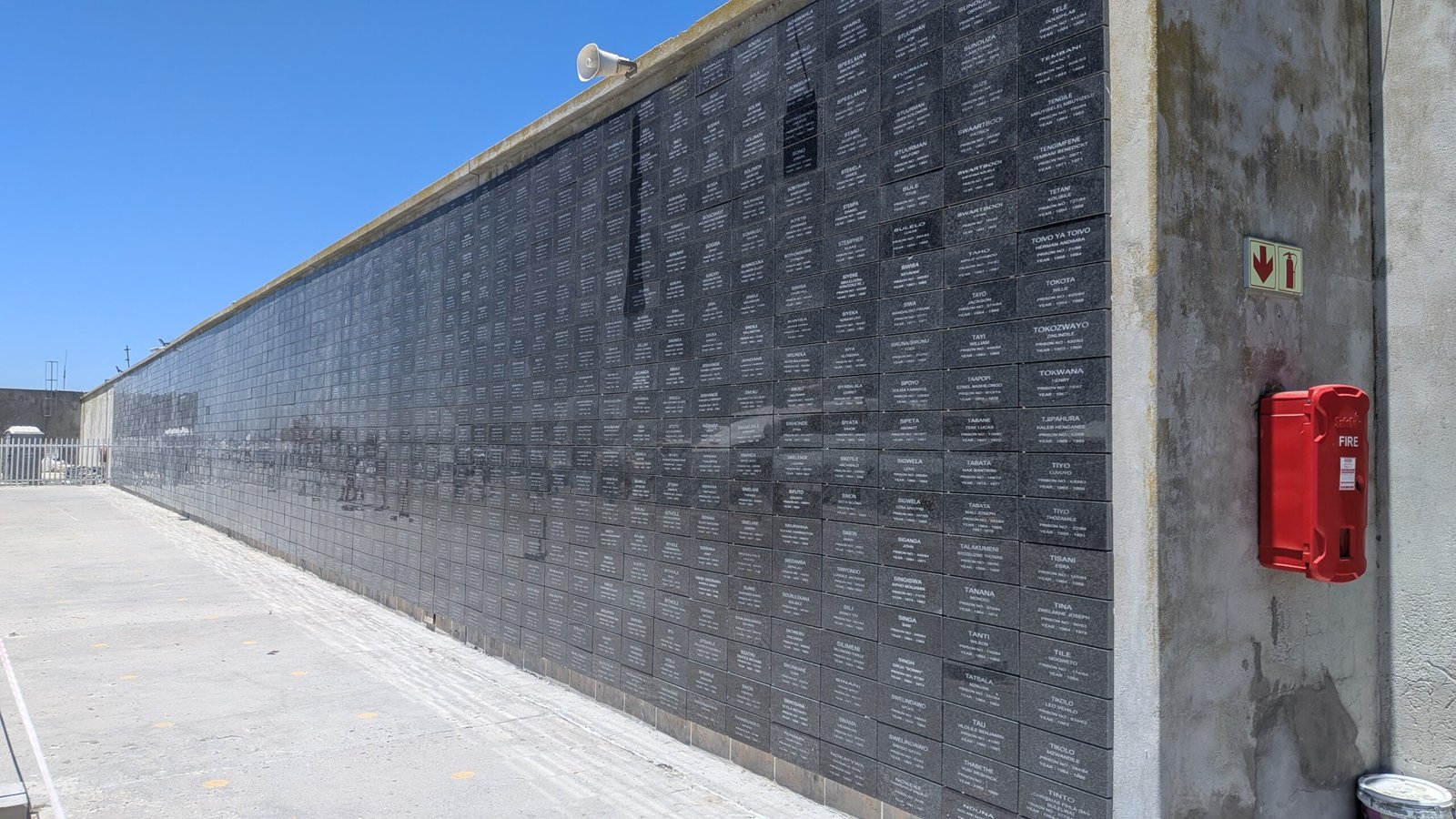
The focus on of both these men was on education, thinking, debate and humanity. We found it an incredibly inspiring contrast to the ignorance and poison that goes for most political speech at the moment. And yet, incredibly painful to see that those who fought and suffered for a better system now feel betrayed and abandoned by the party they brought to power. And as we return to the boat, we see this wall commemorating all the inmates of RI , just to highlight the scale of the horrors –
Back down to earth
It’s hard to take on board everything we’ve just heard and seen. We wander through the Waterfront area of Capetown, which is a temple to modern consumerism a long, long way from the world we just visited . Apartheid has gone, but 90% of the customers are white, while all those working / serving here are … not. Maybe that 10% is a start ?
To finish on a positive note – the seals we saw playing in the harbour make a beautiful advert for togetherness.

Let’s close the trip on that thought. As the seals might say –
So Long, & Thanks For All The Fish
Very informative… and moving.
Thanks, Dave !